Schooled By History: How Divergent Thinkers Bring Structure + Flexibility to Work
“Independent fire!”
After watching “Young Washington” this weekend, these words from one of the battle scenes keep bouncing to the forefront of my mind. The movie itself wasn't what stayed with me. It was the unexpected rabbit hole it would take me down, inspiring new perspectives on how we work today.
Important to note: As with many historical figures, George Washington has a deeply complicated legacy. This post is not intended to glaze over that history. As a woman of color who navigates countless rooms where I don’t belong, I have a piercing awareness of how my ancestors fit into the past. But I still want to see the full picture. I look to the past with open eyes and an open mind. I take elements of those lessons to understand how they apply to my world today.
Intrinsic Motivation
Seeing a founding father depicted on screen as a stubborn, determined eleven-year-old who took marching orders mainly from himself had me laughing into my popcorn. As a self-directed person born with a bit of a stubborn streak, I could relate to the scene where George marched away from his uncle after hearing he was forbidden from going to school:
“George, where are you going?” – Uncle
“To school!” – George
Intrinsic motivation can be hard to break, impossible to miss, and hilarious from an outsider’s perspective. Professionals with career paths that are more of a swirly abstract squiggle than a straight line to the top often feel motivated differently from their peers.

As kids, we were the ones founding lemonade-slushy-with-sprinkles stands, defying the fashion gods by wearing a tutu and light-up sneakers, or inventing a jungle gym constructed out of an old tire and rope.
As we grow up and into the workplace, that drive often gets relegated to safe spaces.
We stay up late to invent new processes or products.
We take up an outlandish hobby on the weekends—and it inspires us to do better work.
We try to persuade the room of executives with a new, but data-backed, idea.
We learn the rules so we can improve them.
It starts to get interesting when our internal compass becomes the advantage. The wanderer may grow into the discerning adventurer. The recovering rash decision-maker may later be a calculated risk-taker.
In the movie, this change was most evident in the way George’s character approached war.
Command and Control Cultures
George’s approach to battle started with the most overused, uninspired tactics of the time. Britain’s occupation of the Americas in the 18th century was marked by rigid hierarchy, social standing, and top-down strategies that were quickly shaken up by enemy warfare in rough terrain.
The most popular infantry tactic was volley fire. You’ve seen it if you’ve ever seen an American history reenactment. Organized by rank or platoon, soldiers would line up according to command, take aim, and fire simultaneously.
Volley fire makes sense if both armies play by the rules. But imagine placing a lineup of perfectly poised, formulaic British soldiers in the middle of the woods. Before the general calls out the order, they’re suddenly surrounded by enemy fire; a rag-tag band of soldiers closing in on them, hiding behind bushes, shooting fast, and moving freely.

In scenarios like this, hyper-organized volley fire was cartoonishly ineffective. British soldiers were basically sitting (or standing) ducks because of:
Momentary Defenselessness: It took up to 30 seconds to reload early muskets, leaving a firing lines entirely exposed unless they could defend themselves with bayonets.
Extreme Ammunition Waste: Because the tactic prioritized volume over individual precision, entire volleys often missed their mark and amassed ammunition costs.
High Reliance on Discipline: The tactic required flawless unit cohesion. Any breakdown in drills (i.e. the chaotic reality of battle) led to disorganized fire or exposed lines.
Obscured Visibility: After the first volley was released, thick black powder smoke would billow over soldiers in the rear ranks, so they were left to fire blindly into the ether.
In the film, George rallied his remaining forces by encouraging them to use mobile, ranger-style tactics—also known as…
“Independent fire!”
This command allowed soldiers to disperse and shoot individually without waiting for a coordinated sequence.
He wasn’t first to use these tactics, but George was known for formalizing them into a repeatable playbook. His detailed guidelines for frontier warfare helped him shape the Virginia Regiment into one of the best provincial military units in the colonies. He embraced the strengths of both structured and unstructured tactics:
Volleys were necessary for breaking the enemy’s initial charge and hitting target areas en masse.
Mobile skirmishes were critical for scouting, breaking up the enemy’s chain of command, and protecting the main army’s flanks.
Structured Flexibility in the Workplace
Let’s get back to the present moment. If those battle tactics made you think of a project that was delayed by 8 months, or the morning meeting that went awry, hat’s off because I felt the same way.
Right now, a lot of organizations are facing a convergence of rigid hierarchy and unstructured chaos. Old, established organizations have met their disruptive matches. Traditional, predictable processes have been upended by thousands of technology-driven apps, platforms, and communication channels.
There is a lot of murkiness around:
How we are supposed to adapt to change
The best way to integrate new talent into existing structures
Whether we can reconcile an organization’s values with our own

It’s not Mercury in retrograde.
Right now, a lot of organizations are facing a convergence of rigid hierarchy and unstructured chaos.
We’ve been trapped by two opposite ways of working.
The tradition trap:
Established organizations often rely on tenure, title, relationships, and deferential communication styles. Their seasoned employees also tend to keep expertise “in their heads” rather than formalizing training and developing information-sharing networks.
Tried-and-true organizations offer structure and longevity that many startups and software companies can only dream of. But after staying the course for 10 to 20 years, their leaders may be grossly unaware of the blind spots they have when it comes to collaborating effectively, eliminating manual processes, and adjusting to the current environment.
This makes it impossible for independent thinkers to make a home within these organizations and recalibrate old processes for the better—until it’s too late.
The novelty trap:
On the flip side, startups or businesses that have zero sense of structure go into the future blind. They are led by incredibly creative thinkers, people willing to jump into uncertainty, and charismatic dynamos skilled at growing businesses fast and blazing new trails.
But they risk venturing into too many directions before getting back to the purpose behind the organization and the overarching goals. They can also be averse to letting things grow slowly.
Everything is weighing on the tactic of the moment.
Every team member is wearing every hat.
The orders from the top may change by the minute or, worse, they are never called out at all.
This burns out steady, reliable, long-term-oriented thinkers who could actually help the organization grow.
The Identity Crisis:
“We embrace a culture of relaxed, gritty, innovative, proven, authentic, AI-trailblazing, human-first, work-life-balanced hustlers.”
When these traps are prevalent, the mission statements cheered on at team retreats start to look like fantasies.
Yes, the buffet may be great and offer vegetarian options. But authenticity is not a true value if no one remembers your name until you’ve been at the company for five years, questions are considered an affront to “the way we typically do this,” and every email to someone higher ranking must be at least 500 words to be palatable.
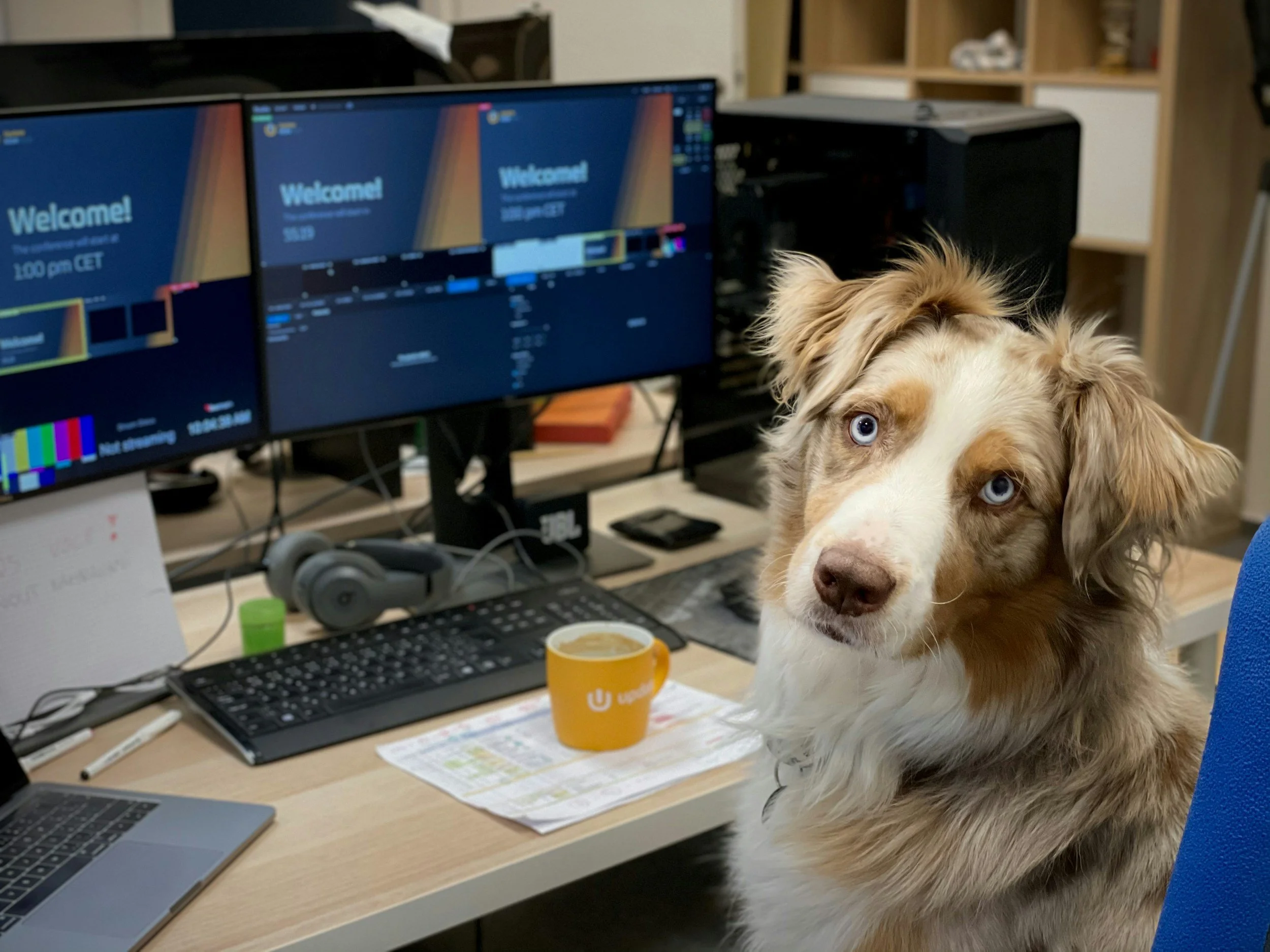
Yes, your office may let you bring your dog in on Fridays. But work-life balance is non-existent if new products launch daily and everyone is essentially functioning as the marketing agency, COO, project manager, developer, sales executive, and accountant.
It’s cool that the door to your office is open. But if you leave every email from subordinates on read, you don’t have an open-door policy. You’re not “committed to transparency” if you’re just biding time and hoping Martha, the intern, forgets that she asked you for feedback three weeks ago.
Finding Middle Ground
One of my favorite sayings is, “There’s always a third way.” And I think that’s why lessons from the movie stuck with me.
The character started with an unstructured, self-motivated direction and learned from it.
He watched the majority in power use a rigid, status-motivated approach and learned from it.
Then, he developed a third way that was designed to adapt to the current environment and empower others to collaborate.
Thank you for reading. As a fractional marketing strategist, I work with business owners and organizations to find that third way. If you’re interested in collaborating or talking through your next big idea, fill out the form below. I’d love to hear from you.